
Remote Door Access: Discover 11 Revolutionary Features

In the age of digital transformation, the concept of security has evolved beyond traditional locks and keys. Enter the realm of remote door access, a technology that’s rapidly changing how we think about safety and convenience. At the forefront of this revolution is the IP intercom, with brands like BAS-IP leading the charge. But what makes these systems so special?
What is Remote Door Access?
Remote door access, often referred to as “remote access control,” is a sophisticated technology that enables individuals or authorized personnel to control, manage, and monitor entry points of a building or facility from a distance. This is achieved using electronic and digital systems, as opposed to traditional mechanical locks and keys.
Evolution from Traditional Systems
Historically, access to buildings or rooms was granted using physical keys. However, with the advancement of technology, the need for more secure and convenient methods became apparent. Remote door access systems emerged as a solution, offering a blend of security, convenience, and flexibility.
Components and Mechanism
Door Entry Panels
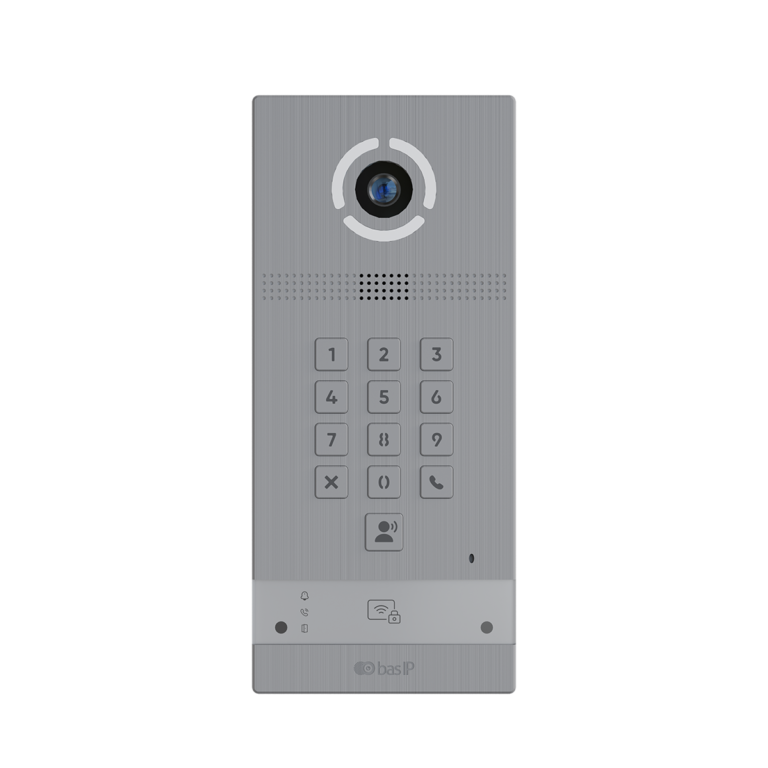
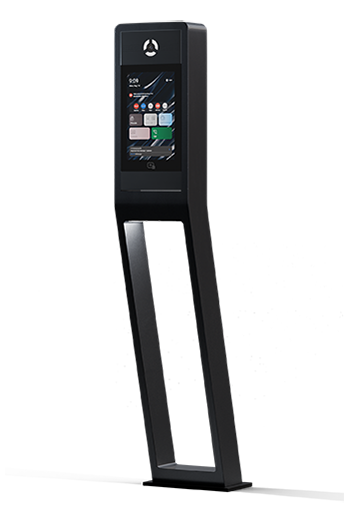
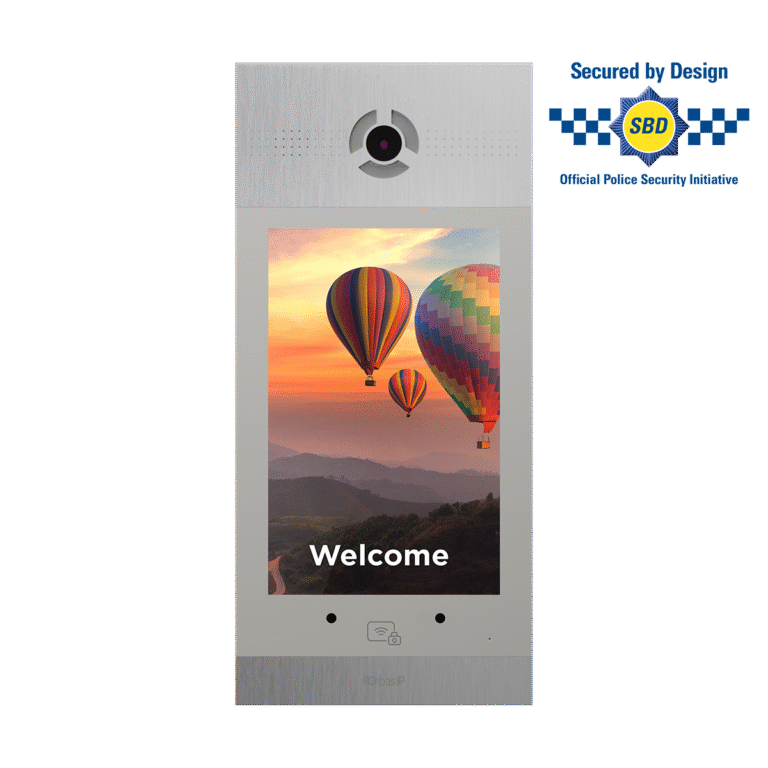
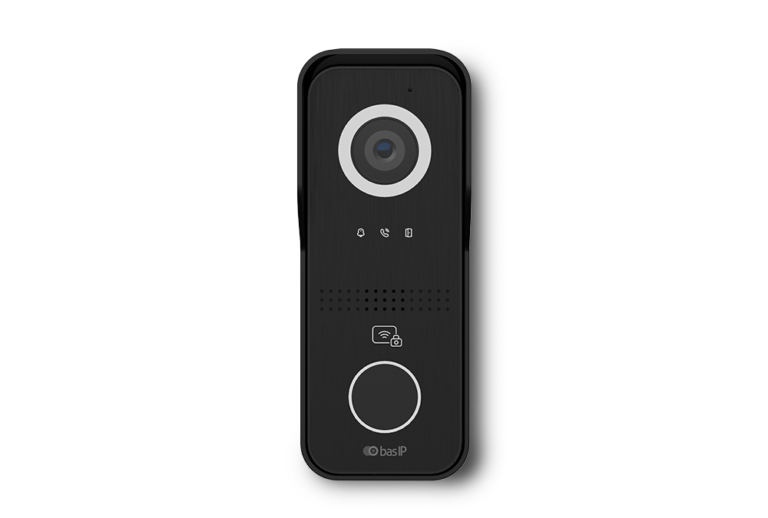
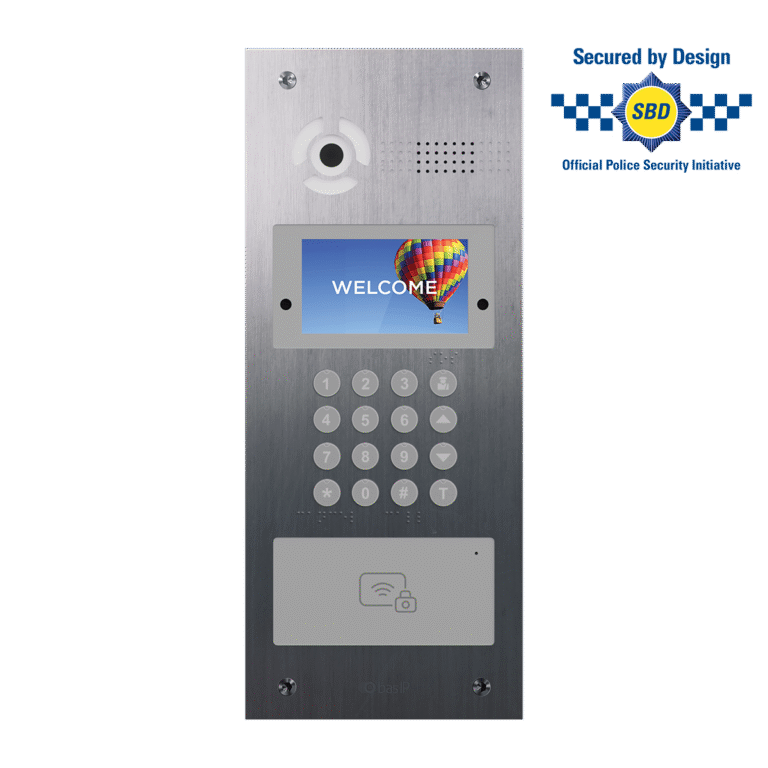
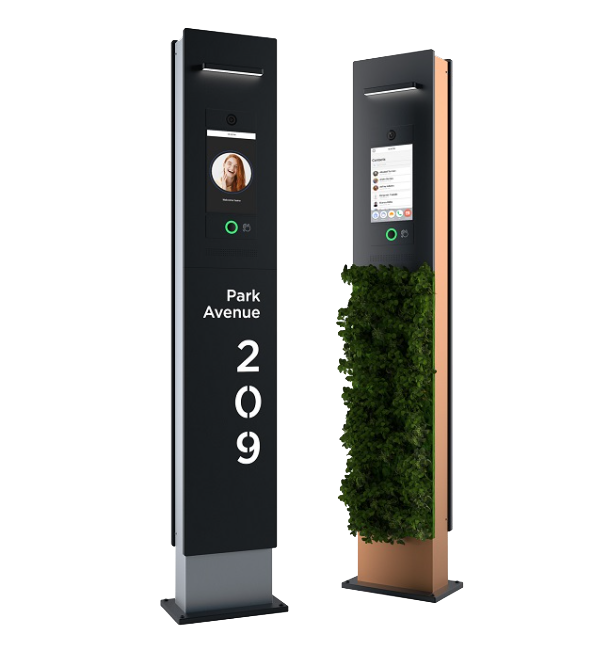
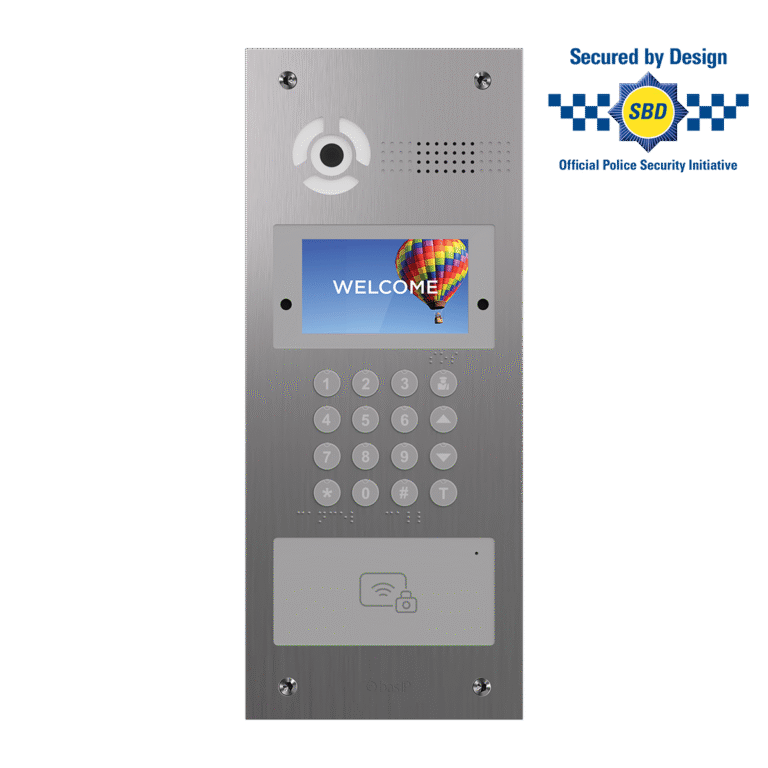
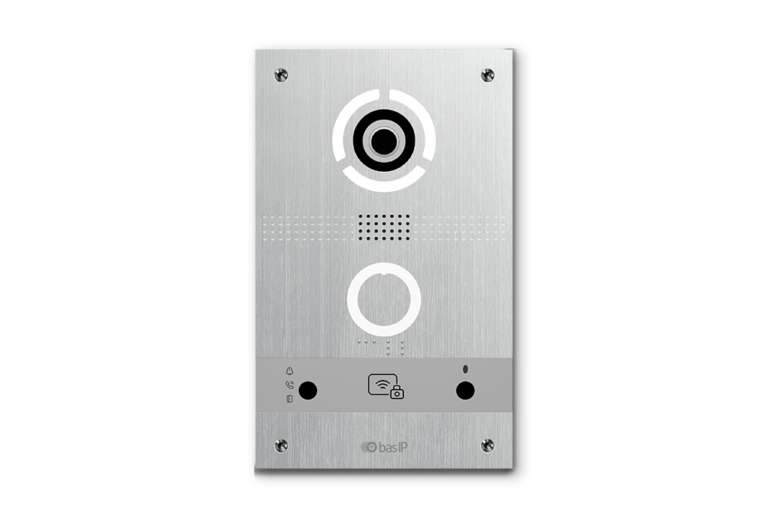
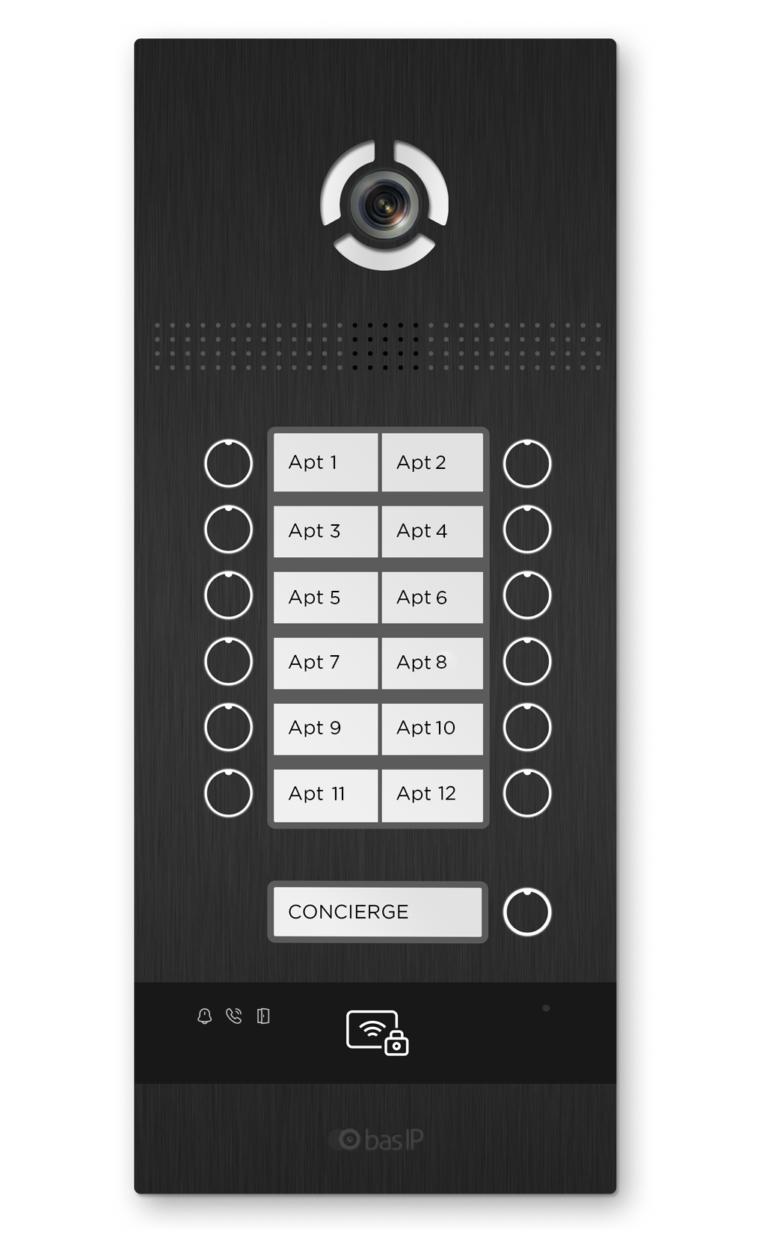
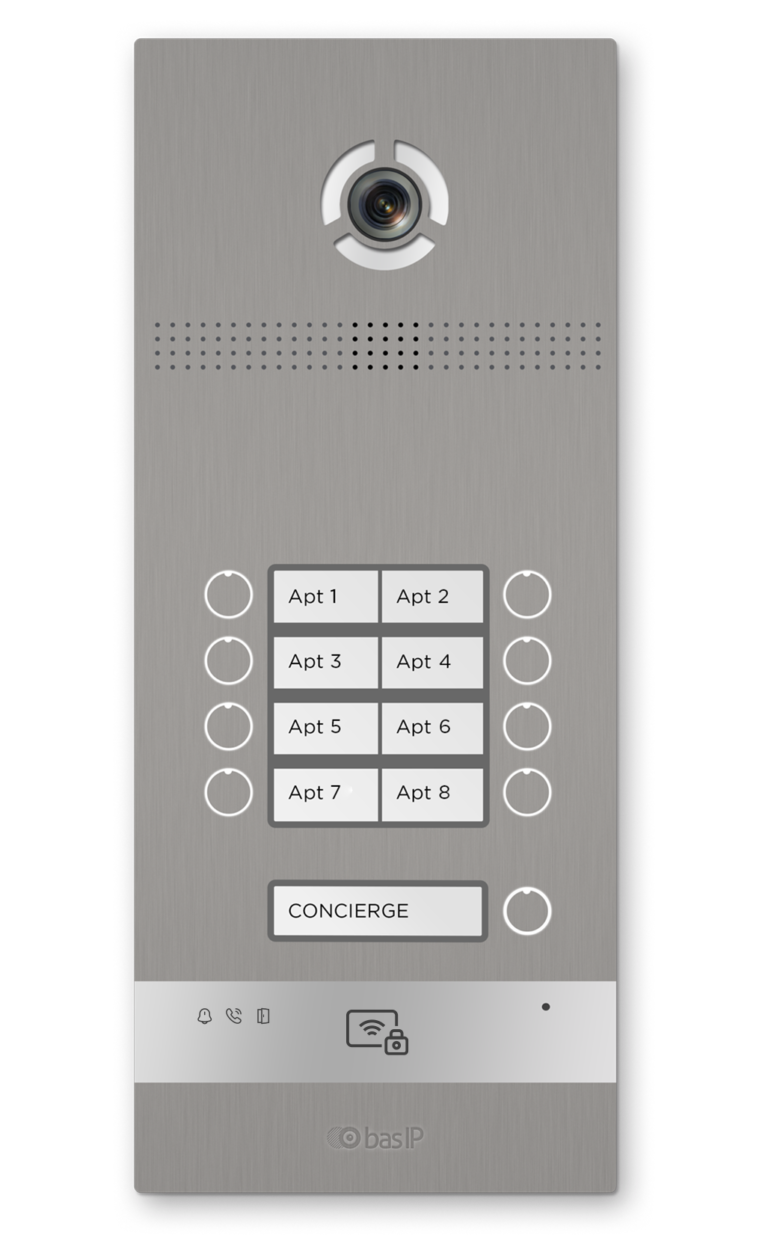
At its core, a remote door access system comprises several components:
- Access Control Panel: This is the brain of the system, where all decisions are made based on the input it receives.
- Access Devices: These can range from key fobs, card readers, biometric scanners (like fingerprint or facial recognition), to mobile apps.
- Locking Mechanism: Electronic locks that can be engaged or disengaged remotely.
- Communication Network: This allows the system to communicate with other devices, often using CAT5, CAT6 or Wi-Fi networks.
When an individual attempts to gain access, the access device reads the provided credentials (like a fingerprint or a code). This information is sent to the control panel, which then verifies the credentials against its database. If the credentials match an authorized entry, the control panel sends a signal to unlock the door.
Applications and Use Cases
Remote door access systems are versatile and find applications in various sectors:
- Residential: Homeowners can grant or deny access to visitors even when they’re not at home.
- Commercial: Offices and businesses use these systems to restrict access to certain areas.
- Government Facilities: High-security zones use advanced biometric systems.
- Educational Institutions: Schools and colleges use them to ensure student safety.
The Rise of IP Intercoms
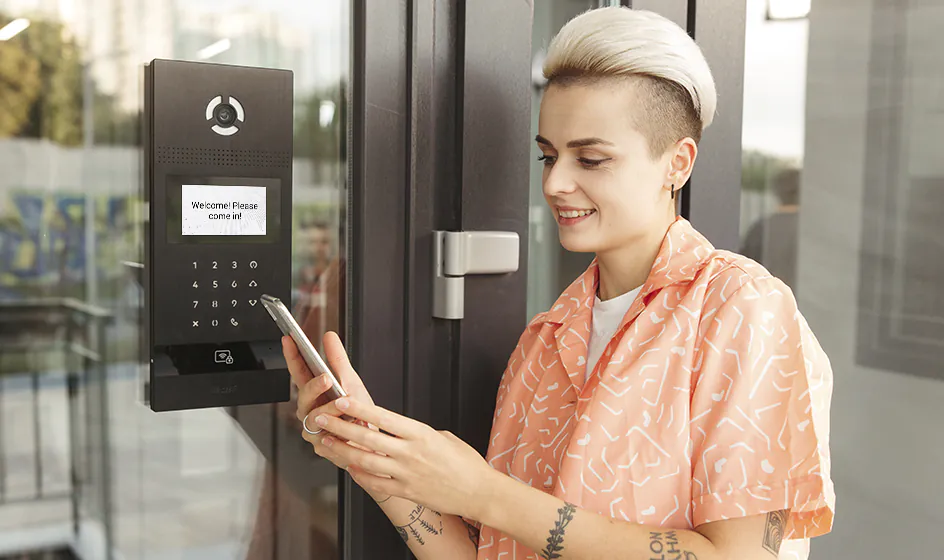
IP intercoms, standing for “Internet Protocol intercoms,” represent a significant leap in the world of communication and security. Unlike traditional intercom systems that relied on analog signals and dedicated wiring, IP intercoms utilize the internet or local networks to transmit audio and video signals.
From Analog to Digital
The transition from analog to digital intercoms was driven by the need for clearer communication, real-time video feeds, and integration with other digital systems. IP intercoms brought about a revolution, offering high-definition video, crystal-clear audio, and the ability to connect and communicate from virtually anywhere, given the presence of a network connection.
BAS-IP’s Pioneering Role
BAS-IP was one of the trailblazers in this domain. As one of the first brands to introduce IP intercoms to the market, they set the standard for what these devices could achieve. Their early adoption and innovation in this field played a pivotal role in shaping the industry’s trajectory, pushing other brands to innovate and adapt.
Key Features of Modern Remote Door Access Systems
| Feature | Description | How It Helps in Remote Door Access |
|---|---|---|
| Seamless Intercom Functionality | Ensures calls reach the tenant’s intercom device even without smartphones or internet. | Provides a fail-safe communication method, ensuring uninterrupted access control. |
| Tailored Cases and Interfaces | Offers customized interfaces and cases for gated communities. | Enhances user experience and ensures the system fits seamlessly into various environments. |
| Remote Concierge Services | Redirects calls to guard stations or remote staff members. | Enables off-site management of access, increasing flexibility and efficiency. |
| Link Property Management | Centralized access control dashboard integrated with BAS-IP hardware. | Simplifies management and monitoring of access points from any location. |
| Customizable OEM Mobile App | Allows companies to customize the BAS-IP app. | Offers a personalized user experience while maintaining top-tier technology. |
| Secure Access Card Protection | Encrypts access cards to prevent unauthorized duplication. | Enhances security by preventing unauthorized access through duplicated cards. |
| Tenant Communication | Streamlines communication between residents and service companies. | Facilitates efficient communication, ensuring smooth access management. |
| Open API | Incorporates a JSON API for broader software ecosystem integration. | Allows for seamless integration with other software systems, enhancing functionality. |
| Targeted Advertising | Displays promotional content on entry panels. | Enhances user experience and can inform residents of relevant services or updates. |
| IP CCTV Integration | Transmits video feeds to NVRs and allows access to IP cameras on monitors. | Enhances security by providing continuous surveillance and easy access to video feeds. |
| Induction Loop Connection | Ensures high-quality audio transmission for those with hearing impairments. | Makes the system accessible to all users, ensuring everyone can communicate effectively. |
These features, when combined, offer a comprehensive remote door access experience that is efficient, secure, and user-friendly.
Benefits of Remote Door Access
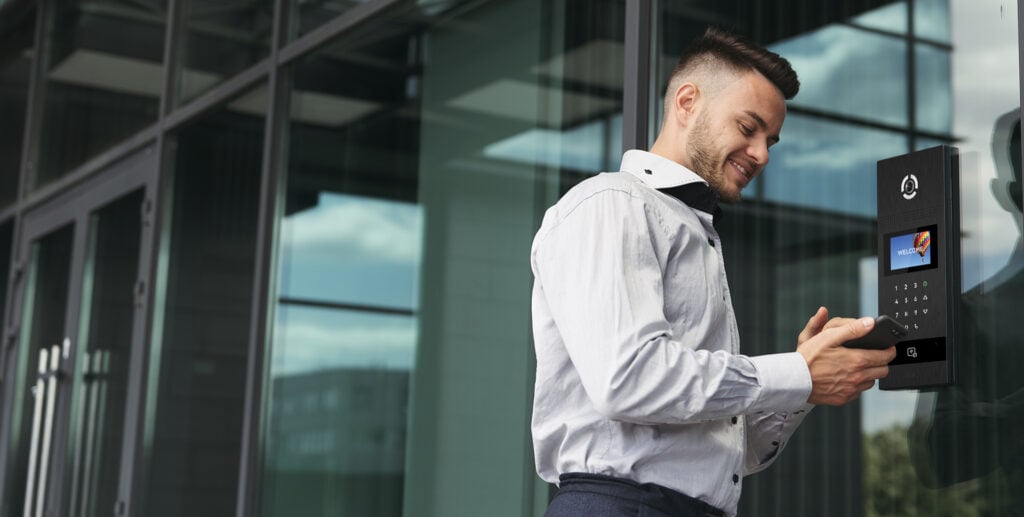
In today’s fast-paced digital age, the way we interact with our surroundings, especially our homes and workplaces, has evolved significantly. Remote door access systems have emerged as a pivotal solution, offering a myriad of benefits that go beyond just opening and closing doors. Here’s a closer look at the advantages they bring:
1. Enhanced Security
- Real-time Monitoring: With remote door access systems, users can monitor entry points in real-time, ensuring that only authorized individuals gain access.
- Instant Alerts: These systems can send instant notifications to users in case of any unauthorized access attempts, ensuring immediate action can be taken.
- Audit Trails: Modern systems maintain logs of every access attempt, providing a clear record of who accessed a particular area and when.
2. Unparalleled Convenience
- Remote Access: Whether you’re at home, in the office, or on vacation, you can control and monitor access to your property from anywhere using a mobile intercom system.
- Keyless Entry: Forget the hassle of physical keys. With systems like BAS-IP Ukey, users can enter using codes, biometrics, or even their smartphones.
- Temporary Access: Grant temporary access to guests, service personnel, or delivery agents and revoke it once their purpose is served.
3. Cost Efficiency
- Reduced Operational Costs: With no need for physical keys, there’s no cost associated with key replacements or lock changes.
- Energy Savings: Some systems can be integrated with smart home devices, allowing for energy-efficient operations like turning off lights or adjusting thermostats when no one is present.
4. Flexibility and Scalability
- Easy Upgrades: As technology evolves, remote door access systems can be easily upgraded to incorporate new features.
- Scalability: Whether you’re managing a single home or a large commercial complex, these systems can be scaled to fit the requirement, allowing for the addition of more doors or users as needed.
5. Integration Capabilities
- Smart Home Ecosystem: Many remote door access systems can be integrated seamlessly with other smart home devices, creating a unified ecosystem where devices communicate with each other for optimized operations.
- CCTV Integration: Enhance security further by integrating the access system with CCTV cameras, allowing for video verification during access attempts.
6. Improved User Experience
- User-friendly Interfaces: Modern systems come with intuitive interfaces, making it easy even for non-tech-savvy individuals to use them effectively.
- Customization: Users can customize settings based on their preferences, such as setting up specific access schedules or receiving notifications only for specific events.
Setting Up Your BAS-IP Intercom System

An IP intercom system, such as the one offered by BAS-IP, facilitates two-way communication between devices over a network, typically utilizing Voice over IP (VoIP) technology. The following steps will guide you through the IP intercom installation process:
1. Plan the Installation
- Identify locations for both outdoor and indoor intercom units.
- Ensure the outdoor unit is easily accessible for visitors.
- Ensure both devices are within your network’s range and have access to a power source if not using PoE.
2. Mount the Units
- Mark the screw and drill holes positions.
- Drill holes and insert wall plugs if required.
- Attach the mounting bracket and connect the Ethernet cable to the unit’s LAN port.
3. Connect Devices to the Network
- Connect the Ethernet cables to a PoE switch.
- Ensure both devices are powered up and connected to the network.
4. Configure the IP Intercom System
- Access the intercom’s web interface using the default IP address.
- Log in with the default credentials and change them for security.
- Assign unique IP addresses to each device and configure audio and video settings.
- Set up additional features like call forwarding or third-party system integration.
By following these steps, you’ll have a fully functional BAS-IP intercom system set up and ready to enhance your property’s security and communication capabilities.
Future Trends in Remote Door Access
The realm of remote door access is ever-evolving, driven by technological advancements and changing consumer demands. As we look ahead, several trends are poised to shape the future of this industry, making access control more secure, convenient, and integrated than ever before.
1. Biometric Integration
- Description: Biometric technologies, such as fingerprint, facial, and voice recognition, are becoming increasingly popular in remote door access systems.
- Impact: This trend offers a higher level of security by ensuring that access is granted based on unique human characteristics, making unauthorized access even more challenging.
2. Artificial Intelligence (AI) and Machine Learning
- Description: AI and machine learning can analyze patterns and behaviors, predicting potential security threats or tailoring access based on individual habits.
- Impact: Enhanced predictive analytics can preemptively address security concerns, while personalized access patterns improve user experience.
3. Integration with Smart Home Ecosystems
- Description: Remote door access systems will increasingly integrate with broader smart home ecosystems, allowing seamless control of lighting, thermostats, and other devices based on entry and exit patterns.
- Impact: This offers users a more holistic and automated home management experience, enhancing both security and convenience.
4. Cloud-based Access Control
- Description: Storing access data and configurations in the cloud allows for real-time updates, backups, and remote management.
- Impact: This ensures that systems are always up-to-date, reduces the risk of data loss, and allows for easier management of multi-location setups.
5. Advanced Encryption and Cybersecurity
- Description: As remote door access systems become more connected, the need for robust cybersecurity measures grows.
- Impact: Advanced encryption techniques will ensure that data remains secure, and regular software updates will protect against emerging cyber threats.
6. Mobile Credentials
- Description: The use of smartphones as access mobile credentials is on the rise, replacing traditional keycards or fobs.
- Impact: This offers users a more convenient access method, as they typically always have their smartphones on hand, and can also incorporate additional security measures like two-factor authentication.
7. Energy Efficiency and Sustainability
- Description: Future systems will prioritize energy-efficient operations, reducing power consumption and environmental impact.
- Impact: This not only reduces costs for users but also aligns with global sustainability goals.
8. Remote Updates and Diagnostics
- Description: Systems will be able to receive remote firmware updates and undergo remote diagnostics for troubleshooting.
- Impact: This ensures that systems remain up-to-date with the latest features and can be maintained with minimal physical intervention.
Conclusion
The landscape of security and access control has undergone a transformative journey, evolving from rudimentary locks and keys to sophisticated remote door access systems. As we’ve delved into the intricacies of this technology, from the rise of IP intercoms like BAS-IP to the future trends shaping the industry, it’s evident that the confluence of technology and security is reshaping how we interact with our environments.
The benefits of remote door access systems are manifold. They offer unparalleled security, convenience, and flexibility, catering to the diverse needs of homeowners, businesses, and large institutions alike. With brands like BAS-IP leading the charge, users are equipped with tools that are not only state-of-the-art but also user-friendly and tailored to their specific requirements.
Furthermore, as we look to the horizon, the future trends in remote door access promise even more integrated and intelligent solutions. The integration of AI, biometrics, and smart home ecosystems signifies a move towards a more holistic approach to security—one that is proactive rather than reactive.
However, with these advancements also comes the responsibility of ensuring robust cybersecurity measures and ethical considerations, especially when dealing with personal biometric data. It’s a balance that the industry must strike to ensure that the pursuit of innovation doesn’t compromise individual privacy and security.
In wrapping up, the realm of remote door access stands as a testament to human ingenuity and the relentless pursuit of better, safer, and more efficient ways of living and working. As technology continues its forward march, one can only anticipate the myriad of innovations that await on the horizon, promising to further revolutionize the way we think about access and security.