
Intercom Multi-Factor Authentication (MFA)
Multi-factor authentication is a scary word, but you come across this feature every day!
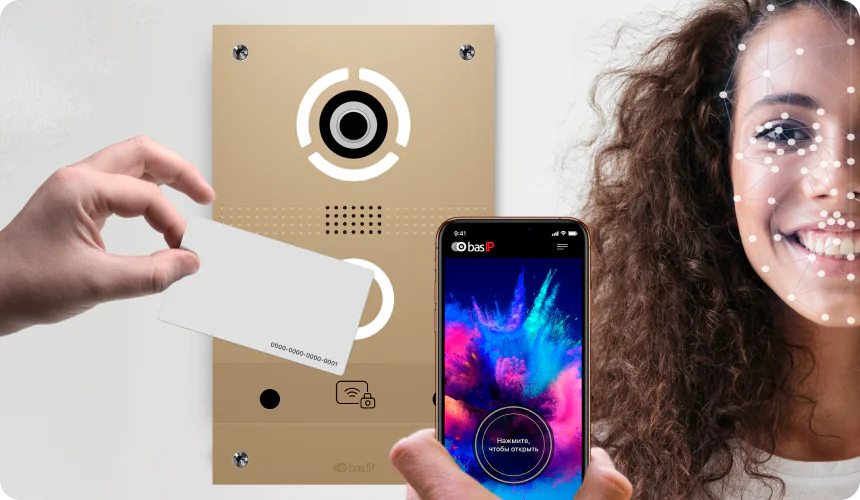
2FA in Daily Life
When you swipe your card at an ATM, it asks you to enter a pin code. When you authorize on the site by entering your login and password, and at the same time you receive a Security code on your phone, and only after the correct entry you can get into your account. All these are different types of multi-factor authentication, which allow to authorize the user and check additional data / information about the person to make sure that this is the person who has the right to use the services.
Since cybersecurity is now a priority for many companies, they are implementing additional security measures for their users and employees.
Sometimes referred to as two-factor authentication, or 2FA, is a security enhancement that allows you to present two proofs – your credentials when logging into an account. Your credentials fall into any of these three categories: something you know (such as a password or PIN), something you own (such as a smart card), or something you are (for example, your fingerprint or face, palm). For added secYour credentials must be in two different categories for added security two different passwords will not be considered multifactorial.
For example: logging into your bank account. If you have enabled MFA or your bank has enabled it for you, things will be a little different. First, you usually enter a username and password. Then, as the second factor, you will use the authenticator app, which will generate the one-time code entered on the next screen. Then you are logged in – that’ it!
According to a Google survey, using 2FA is one of the top three things security professionals do to protect their online security. And consumers feel the same way: Nearly 9 out of 10 (86%) say using 2FA makes them feel their online information is more secure, according to TeleSign.
Additional Security Measures in Intercoms
Apartments, houses – all these living quarters store no less expensive values for people on an equal footing with bank accounts, and maybe even more precious. And these dwellings are worth protecting no less seriously.
MFA helps protect you by adding an extra layer of security, making it harder for the bad guys to enter the building as if they were you. Your information is safer because thieves need to steal your password and phone. You will definitely notice that your phone is missing, so report it before the thief can use it to get in. In addition, the phone must be locked, requiring a PIN or your face to unlock, making it even less useful if someone wants to use your MFA credentials.
When should I use MFA?
It is impossible to stop all the robberies and thefts, but simple steps can greatly reduce the likelihood that you will be the next victim.
You should use MFA whenever possible, especially when it comes to your visitors, guests, couriers, and other people who have access to your home. While some organizations require you to use MFA, many, like BAS-IP, offer it as an additional option that you can enable. Also, if the company that maintains your home wants to provide you with a convenient way to receive guests in the building, but only offers a PIN code as a way to secure the door, think, “No thanks, not until you provide an MFA to protect my home.”
For example, you regularly use the services of a babysitter and she comes to you at the same time or irregularly, but it is critically important for you that this particular person goes to the intercom (without unnecessary calls to the apartment) and you can already meet him at doorstep, without being distracted by calls to the intercom. Therefore, by giving her / him a pin code on the intercom, he may fall into the wrong hands. But in the BAS-IP intercom, you can bind a pin code to a card or a pin code to a QR code. Thus reducing the risk to a minimum. The principle What you know + what you have will be 100% observed and the probability of strangers wandering in the house will be reduced to 0.
You can request a list of recommended intercom MFA options that offer BAS-IP and step-by-step instructions for enabling it from our managers here “how to become a distributor“.
Protect the most precious thing in your house and everything in it!