
What to Look for When Choosing an Entry Panel for Outdoor Use
Start Not with the Design, but with the Use Scenario
The most common mistake is choosing an entry panel without a clear task in mind. A panel for a private house, a block of flats, an office, or a commercial site is not the same thing.
First, answer the basic questions: How many users will the system have? Do you need a tenant or apartment directory? Will access be by code, card, mobile app, or another method? Do you need a display? How many entrances are there, and who will maintain the system later?
Once the scenario is clear, it becomes much easier to rule out unsuitable models.
Outdoor Conditions Matter More Than It Seems
If the panel is installed outside, it has to cope with rain, dust, temperature changes, sunlight, and everyday exposure. So you need to look beyond the appearance of the housing and check the level of protection.
In practice, at least two parameters matter: the degree of environmental protection, usually described by the IP rating, and the resistance of the housing to mechanical impact, described by the IK rating. Even a panel with good features can disappoint quickly if it is not truly suitable for outdoor installation.
You should also pay close attention to the mounting position: is there a canopy? Will the panel sit in direct sun? Is there a risk of constant moisture? And how exposed is it to accidental knocks or vandalism?
The Camera Is About More Than Resolution
Many people look first at the resolution numbers, but that is not enough for an entry panel.
What matters is how the camera behaves in real life rather than in marketing images: the angle of view, performance in backlight, how readable the image remains in the evening, and whether the panel has decent illumination for low light conditions.
A very narrow viewing angle can produce an awkward picture, while poor low-light behavior can make the video technically present but not very useful.
Sound Quality Matters as Much as the Image
Poor audio ruins the experience faster than an average camera. If the visitor is hard to hear, if the voice breaks up, or if wind and echo dominate the conversation, the intercom becomes irritating regardless of how impressive the brochure looked.
So when choosing an outdoor panel, do not just note that it has a microphone and speaker. Look at the actual clarity of two-way audio in real conditions. In practice, that usually means testing it or reading reliable user feedback.
Access Methods
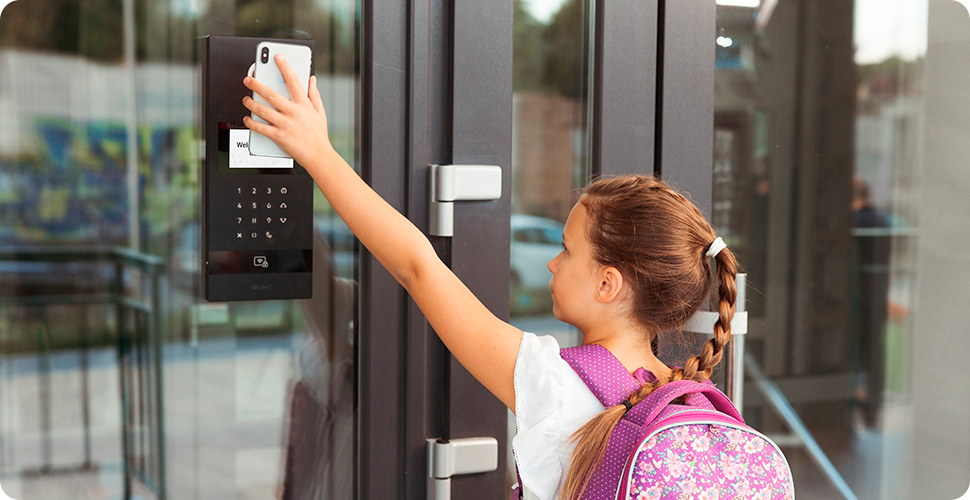
Some sites need nothing more than a call button and the ability to release the door from inside. Others need cards, codes, mobile access, Bluetooth, access control integration, or more advanced scenarios.
There is no point paying for functions that will never be used. But it is equally unwise to choose an overly simple panel for a site with real access requirements.
The better approach is to decide how people will actually enter the property and then choose the panel to match that logic.
Compatibility Matters More Than a Long Feature List
One of the most common mistakes is choosing the entry panel as if it were a stand-alone device rather than part of a system.
In practice, you need to check which type of platform it is compatible with, analog or IP; which monitors will be used; how power is provided; whether a network is needed; and which access modules or controllers will work alongside it.
If you do not check compatibility in advance, you may end up with a very attractive device that either does not integrate properly or creates unnecessary complications during installation.
This matters even more once the choice has narrowed down to a specific brand. Even within BAS-IP, models can differ significantly in access logic, site type, mounting approach, and compatibility. So the choice should be made not by “brand in general” but by selecting a specific panel for a specific scenario.
Mounting and Serviceability Also Need Thought in Advance
The panel should not only look good on the day you buy it but also be durable and functional. It also needs to be sensible to install and service.
It is worth understanding how it mounts, how much space it needs, whether there are depth limits, how cable entry is arranged, and how easy it will be to maintain or replace later. That is especially important outdoors, where access to the panel often becomes more difficult and more expensive once the finishes are complete.
What Really Matters in the End
If you strip away the secondary issues, there are five things to check when choosing an outdoor entry panel:
- does it suit the actual task of the site;
- can it cope with the real outdoor conditions;
- does it provide genuinely usable video and audio;
- does it match the required access logic;
- is it compatible with the rest of the system in place or planned for the site;
If those points are covered, design can then become the next criterion. Not the other way round.
If You Want the Short Version
A good entry panel for outdoor use is not the one with the prettiest design or the longest feature list.
It is the panel that suits the installation conditions, works properly every day, and fits into your system without creating unnecessary problems.