
Skip to Content
Go back

How to Check Your Rental History: Unlock Your Past
How to Check Your Rental History

Understanding your rental history is crucial when it comes to securing your next home. This record, much like a credit report, can significantly influence a landlord’s decision to rent to you. Therefore, knowing how to check your rental history is an essential skill for any tenant.

Why Checking Your Rental History is Important

Your rental history is a record of your behavior as a tenant. It includes information about your payment punctuality, lease agreement violations, and any eviction proceedings. Landlords use this information during the tenant screening process to assess if you’re a reliable renter. By checking your rental history, you can ensure there are no inaccuracies that could potentially harm your chances of securing a rental property.

What is Included in a Rental History Report

A rental history report typically includes:

InformationDescription
Personal InformationYour name, date of birth, and social security number.
Rental HistoryDetails of your past rentals, including addresses, dates, landlords, and any issues.
Payment HistoryRecord of your rent payment punctuality.
EvictionsAny eviction proceedings against you.
Lease ViolationsAny violations of your lease agreements.

How to Check Your Rental History: A Step-by-Step Guide

Contacting Your Previous Landlords

Start by reaching out to your previous landlords. They can provide information about your rental history directly. Remember to approach them professionally and respectfully.

Checking with Credit Reporting Agencies

Credit reporting agencies like Experian, Equifax, and TransUnion can provide rental history reports. You can request these reports annually for free or for a small fee.

Using Online Rental History Services

Several online services provide comprehensive rental history reports. These platforms can be a convenient way to check your rental history, especially if you’ve moved frequently.

See also  Stop the Design Disconnect: Make Your Door Entry Panel Part of the Interior

Understanding Your Rental History Report

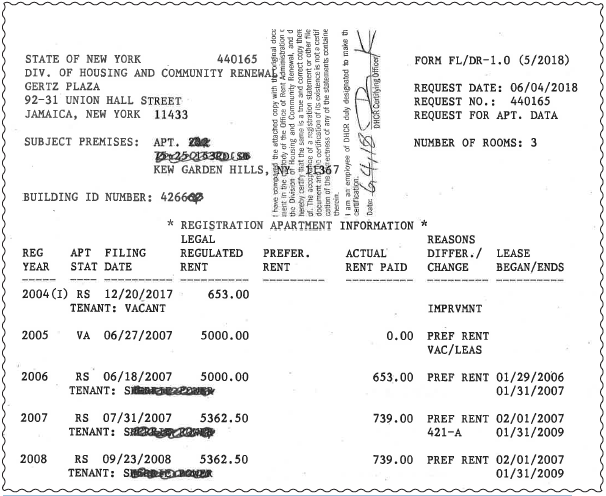
Once you have your rental history report, review it carefully. Ensure all personal information is accurate, and understand the details of your rental history. If you find any inaccuracies, contact the relevant party to correct them.

How to Improve Your Rental History

Improving your rental history involves consistent rent payments, adhering to your lease agreement, and maintaining a good relationship with your landlord. If you’ve had issues in the past, don’t despair. Over time, with good tenant behavior, your rental history can improve.

Conclusion

Checking your rental history is a proactive step towards securing your future rentals. By understanding your rental history, you can address any issues and improve your chances of being a top pick for landlords.

FAQs

Q: How often should I check my rental history?

It’s advisable to check your rental history annually or before starting a new rental application.

Q: Can I dispute inaccuracies in my rental history report?

Yes, if you find inaccuracies in your report, you can dispute them with the reporting agency or the landlord who provided the information.

Q: How long does negative information stay on my rental history?

Typically, negative information like evictions stays on your rental history for seven years.

similar articles
Articles

The entry panel is the first point of contact between a building and a person. And if this building is municipal, social, medical, or educational, the panel at the entrance must be clear and convenient for everyone: the hard of hearing, the visually impaired, elderly people, visitors unfamiliar with the system. AV-08FBIL was designed precisely […]

Articles

A video intercom monitor is often treated as just a screen on the wall. In reality, it is one of the key parts of the system: it is the device through which the user receives the call, sees the visitor, speaks with them and manages access. What a Video Intercom Monitor Is A video intercom […]

Articles

When the word “SIP” appears in the specifications of an intercom or entry panel, it often sounds like something purely technical. In practice, the meaning is much more practical. SIP is a protocol used to establish communication between devices on a network. Put simply, it helps one system “call” another, establish a connection, and begin […]

Articles

When people first come across the term “IP video intercom,” it often sounds more technical than it really is. In practice, the basic idea is fairly simple. An IP video intercom is an intercom system that works over a network. In other words, communication between the entry panel, the indoor monitor, and other devices is […]

Articles

An entry panel is often treated as just “the button by the door.” In reality, it is one of the key elements of the intercom system. It is the device through which a call begins, audio and video are carried, and, in some cases, access, identification, and different entry scenarios are handled. So it is […]

Articles

Access control and a video intercom are often treated as though they were the same thing, because both are linked to entering a building. But they are not quite the same. A video intercom is primarily about communication with a visitor: the call, the conversation, the image, and the decision to release the door. Access […]

Articles

What PoE Means in Simple Terms PoE stands for Power over Ethernet. Put simply, it means that the same Ethernet cable can carry both data and power. That means that, for some devices, you do not need a separate network connection and a separate power feed. If the equipment supports PoE, one cable may be […]

Articles

Why This Comparison Is Often Presented Too Simplistically When people talk about the difference between an IP and an analog video intercom, the discussion is often reduced to a crude formula: analog is basic and outdated, while IP is automatically modern and better. That is a convenient story if someone only wants to sell IP […]

Articles

Start Not with the Design, but with the Use Scenario The most common mistake is choosing an entry panel without a clear task in mind. A panel for a private house, a block of flats, an office, or a commercial site is not the same thing. First, answer the basic questions: How many users will […]

Articles

What the Difference Actually Is A flush-mounted panel is recessed into the wall or into a prepared niche, so only the front face remains visible from the outside. That makes the installation look neater and more integrated. A surface-mounted panel is fixed on top of the wall. It protrudes further, but it is usually much […]