
KNX Smart Home System: Revolutionizing Home Automation
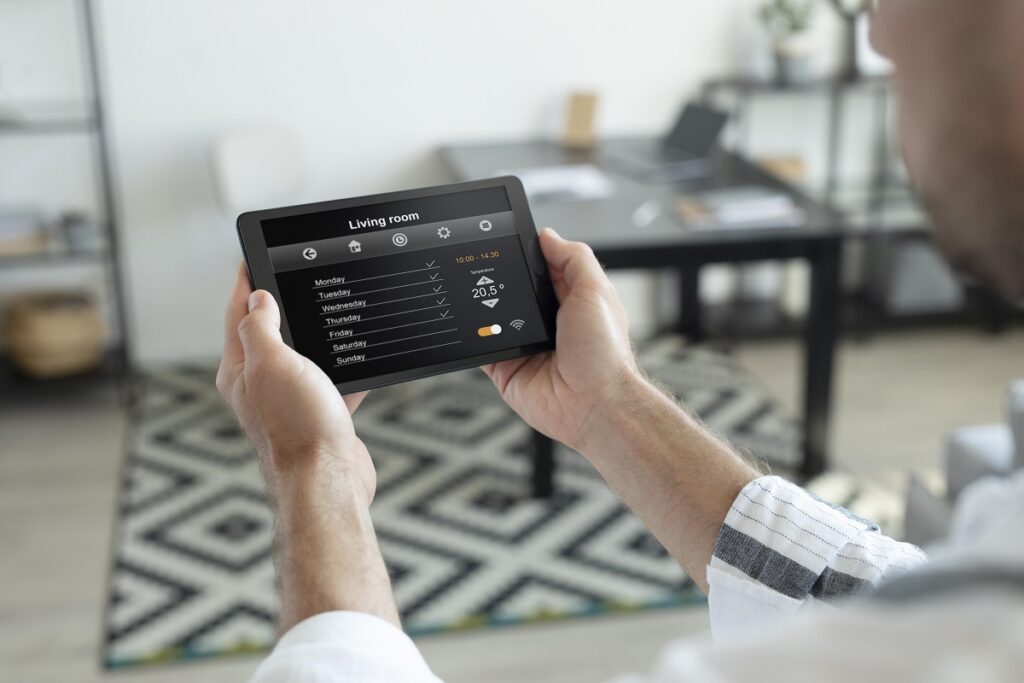
The realm of home automation has experienced incredible evolution, with a clear standout stealing the spotlight: the KNX smart home system. This ingenious innovation is transforming how we perceive domestic spaces, enhancing convenience, efficiency, and security. In this comprehensive guide, we delve deep into the workings of the KNX system, unveiling its revolutionary contributions to home automation.
The Dawn of Smart Homes
Before KNX, the concept of a smart home was limited to science fiction narratives. The advent of the KNX smart home system nudged us into a reality where homes can ‘think’ and ‘act.’ This section explores the history and progress of smart homes.
Chart: Evolution of Smart Homes
| Year | Key Development |
|---|---|
| 1980s | Inception of the smart home concept |
| 1990s | Emergence of the Internet of Things (IoT) |
| 2000s | Introduction of smart home devices |
| 2010s | Birth of the KNX smart home system |
| 2020s | Widespread adoption of the KNX system |
What is the KNX System?
The KNX system is a revolutionary, open protocol that facilitates both residential and commercial building automation. Enabling the integration and programming of a range of devices from various manufacturers, KNX has emerged as the gold standard in the smart home and building automation industry.
At its core, the KNX system is based on a simple principle: devices installed in a building can communicate with each other, exchange information, and work synergistically to execute commands. Be it lighting, HVAC, security systems, energy management, audio/video systems, or other domestic appliances, KNX links these devices together on one common bus or network. This harmonious interaction of devices leads to enhanced energy efficiency, security, comfort, and convenience for the users.
The uniqueness of the KNX system lies in its versatility and flexibility. It is not bound to a specific hardware platform and can be implemented through twisted pair wiring (KNX TP), powerline networking (KNX PL), Ethernet (KNXnet/IP), or radio (KNX RF). Moreover, it’s future-proof, thanks to its ability to adapt to new smart home technologies and updates.
The KNX system is also lauded for its international recognition and standardization. It complies with the standards of ISO/IEC, European (CENELEC EN 50090, CEN EN 13321-1) and International (ISO/IEC 14543-3) electrotechnical commissions. This broad acceptance and compliance with global standards underline its reliability and usability across different regions and applications.
Unfolding the KNX System
In an era where technology and practicality coexist harmoniously, the KNX smart home system emerges as a frontrunner, seamlessly integrating multiple facets of home automation into a singular, unified platform. From lighting control and HVAC systems to security measures, the KNX smart home system binds them all together to create a cohesive, intelligent ecosystem within your home.
At its most fundamental level, the KNX system employs a decentralized architecture. Unlike many home automation systems that rely on a central controlling unit, the intelligence in a KNX system is distributed across various devices and components within the system. Each of these components—sensors, actuators, control units—are capable of processing and responding to information independently.
Consider a practical example. A motion sensor in your living room (the sensor) detects movement and sends a signal through the KNX network. This signal reaches the lights (the actuator) and triggers them to turn on. Simultaneously, the air conditioning may adjust to a predetermined comfort level. Here, there isn’t a central server processing these instructions. Instead, the sensor and actuator communicate directly via the KNX protocol.
The KNX Protocol: The Backbone of KNX System

At the heart of the KNX system is the KNX protocol, a unique and intelligent communication system that orchestrates the functionality of smart home devices. It is essentially the language that KNX devices use to communicate with each other, enabling a seamless and efficient smart home environment.
The KNX protocol is based on the OSI (Open Systems Interconnection) reference model, which is a conceptual model that standardizes the functions of communication systems. It is divided into seven layers, each performing a specific function, with data being passed from one layer to another. However, the KNX protocol primarily uses the physical layer, data link layer, network layer, and application layer to facilitate communication in the KNX network.
- Physical Layer: The physical layer is concerned with transmitting raw data over the physical medium of the network. In the context of the KNX protocol, it allows for data transmission over various mediums such as twisted pair wires, powerline, RF, or IP/Ethernet.
- Data Link Layer: The data link layer provides error-free transmission of data frames from one node to another over the physical layer, handling errors in the physical layer and packages bits into frames and sequences.
- Network Layer: This layer is responsible for routing the data (packets) between devices in the KNX network, permitting devices to communicate even if they’re not on the same network.
- Application Layer: The application layer is the closest to the end-user and provides the interface for communication software. In the KNX protocol, this layer controls the application entities, like sensors and actuators, that interact directly with the software.
Importantly, the KNX protocol allows for unicast, multicast, and broadcast communication modes, adding to its versatility in facilitating communication between different devices in a network.
The KNX protocol’s uniqueness lies in its interoperability, which allows devices from different manufacturers to communicate with each other seamlessly. Furthermore, it is this protocol that enables the KNX system’s intelligence and adaptability, making it a leading choice in smart home and building automation systems worldwide.
The Role of KNX in Home Automation
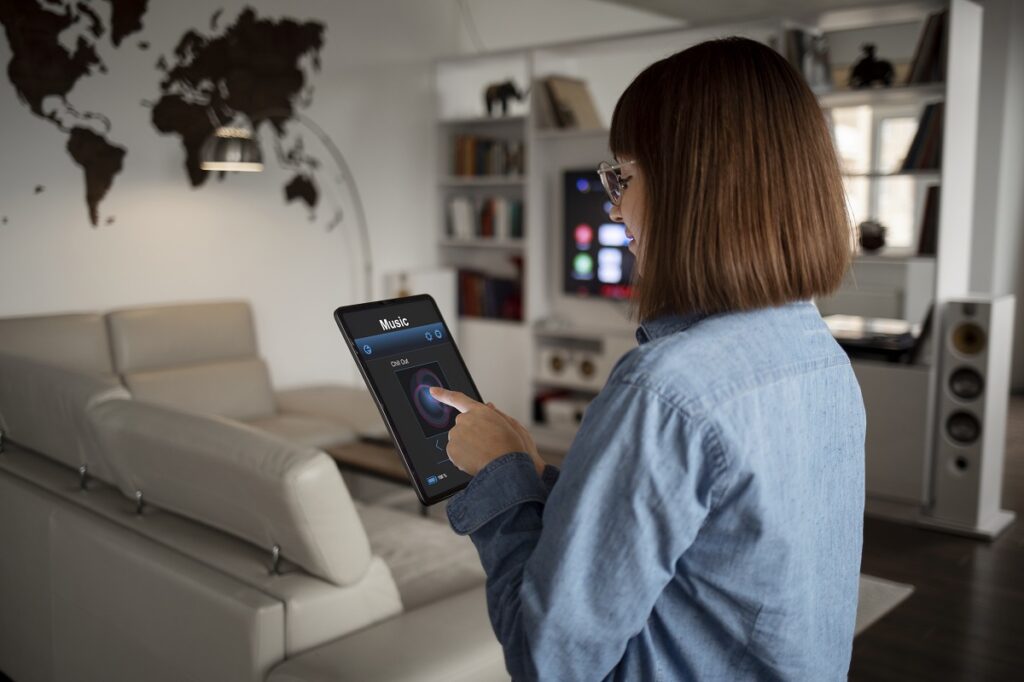
The KNX home automation system is a game-changer. We’ll analyze how this innovative technology is shaping the future of home automation, one smart home at a time.
Benefits of a KNX Home Automation System
The KNX home automation system comes with a host of advantages that not only amplify the convenience factor but also contribute to substantial energy savings, improved safety, and an enhanced quality of life. Let’s delve deeper into these benefits:
- Energy Efficiency: The KNX system allows precise control over various energy-consuming elements in your home, such as lighting, heating, cooling, and shading devices. By optimizing their operation based on your usage patterns and external factors like daylight availability, it minimizes energy waste and contributes to a sustainable living environment.
- Comfort and Convenience: From setting the perfect mood lighting for a dinner party to maintaining the ideal room temperature, KNX home automation provides an unparalleled level of comfort. Automation routines can be set up to perform tasks that would typically require manual intervention, thus freeing up your time and effort.
- Safety and Security: The KNX system can integrate various safety measures such as alarm systems, surveillance cameras, motion detectors, and fire safety devices. It can notify you of any security breach, potential fire hazards, or gas leaks, ensuring your home’s safety.
- Flexibility and Scalability: With KNX, your home automation system can grow with your needs. You can start small with a single room and gradually integrate the entire home. Moreover, with new devices and features continuously being added to the KNX portfolio, your system remains future-proof.
- Interoperability: Being an open standard, KNX can incorporate devices from numerous manufacturers, providing a diverse choice of products and systems. This allows for a highly personalized home automation setup.
Chart: Benefits of a KNX Home Automation System
| Benefit | Description | Example |
|---|---|---|
| Energy Efficiency | Optimized operation of devices to minimize energy waste | Automated shading based on sunlight to reduce HVAC load |
| Comfort and Convenience | Automation routines for tasks requiring manual intervention | Automated lighting scenes for different moods or occasions |
| Safety and Security | Integration of various safety measures | Surveillance cameras and alarm systems connected to the KNX network |
| Flexibility and Scalability | Ability to expand the system with changing needs | Start with automating a single room and gradually include the entire home |
| Interoperability | Compatibility with devices from various manufacturers | Use of different branded devices like sensors, actuators, control panels in a single KNX network |
ROI Calculation for KNX System Installation

To understand the Return on Investment (ROI) for the KNX system, we need to consider the initial installation cost, the energy savings, and any other potential savings it might offer. Calculating an exact ROI can be complex due to the numerous variables involved, but we can use a basic formula to get an estimate:
ROI = (Net Profit / Cost of Investment) * 100%
In the case of the KNX system, the Cost of Investment would be the initial cost of purchasing and installing the system. Net Profit would be the total savings over a period, which could include energy savings, increased property value, and potential maintenance cost reductions.
Let’s illustrate with a simplified example:
Assume the cost of purchasing and installing a KNX system in a house is $10,000.
- Energy Savings (H3): Let’s say that the KNX system reduces your energy consumption by 20%. If your annual energy bill is typically $2,000, a 20% reduction would mean you’re saving $400 per year.
- Increased Property Value (H3): A home with a smart home system can potentially increase in value. While it’s hard to quantify, let’s assume conservatively that the KNX system adds 1% to your home’s value. On a $300,000 home, that’s an increase of $3,000.
- Maintenance Cost Reduction (H3): A smart home system can also potentially reduce maintenance costs by identifying issues before they become major problems. This is harder to quantify, but let’s assume a saving of $100 per year.
Adding these up, after one year you might have made back $400 (energy savings) + $3,000 (increased property value) + $100 (maintenance cost reduction) = $3,500.
So your ROI after one year would be:
ROI = ($3,500 / $10,000) * 100% = 35%
Remember, this is a simplified example and actual savings can vary widely based on your energy rates, the size and location of your home, the specific KNX system components you install, and many other factors. For a more precise calculation, it would be best to consult with a KNX partner or energy consultant.
KNX Smart Home: The Future of Home Automation
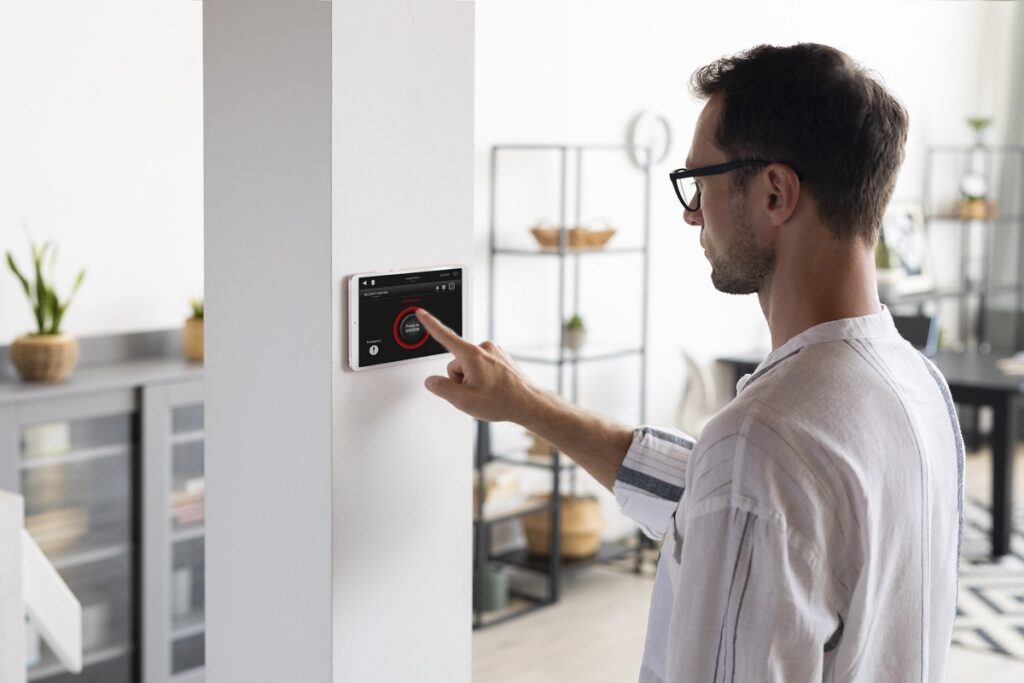
The KNX smart home system is not just a product of cutting-edge technological innovation; it’s a vision for the future. As we move towards a world increasingly influenced by the Internet of Things (IoT), artificial intelligence (AI), and data analytics, the KNX system stands as a cornerstone for the future of home automation.
- Integration with IoT: The Internet of Things is bringing about a revolution in the way we interact with our homes. The KNX system, with its open standard and interoperability, is ready for this revolution. Its compatibility with IoT devices means that homeowners can enjoy a seamless and efficient smart home experience, with a multitude of devices working in sync.
- AI and Machine Learning: Artificial intelligence and machine learning are making waves in home automation. These technologies allow systems to learn from past behavior and adjust their operations accordingly. As AI and machine learning become more sophisticated, we can expect the KNX system to incorporate these technologies, enabling even more personalized and efficient home environments.
- Advanced Energy Management: With rising environmental concerns and the need for sustainable living, energy management is becoming a key focus of home automation. The KNX system is already known for its contribution to energy efficiency, but with advancements in sensor technology and data analysis, we can expect even more precise and sophisticated energy management in KNX-equipped homes.
- Integration with Smart Cities: As we move towards the concept of smart cities—urban areas that use different types of IoT sensors to collect data and then use insights gained from that data to manage assets, resources, and services efficiently—KNX systems could play a significant role. The interoperability of KNX could allow a home to interact seamlessly with its urban environment, sharing information and responding to city-wide commands, such as demand response events from the power grid.
Overcoming Challenges in the KNX Smart Home System
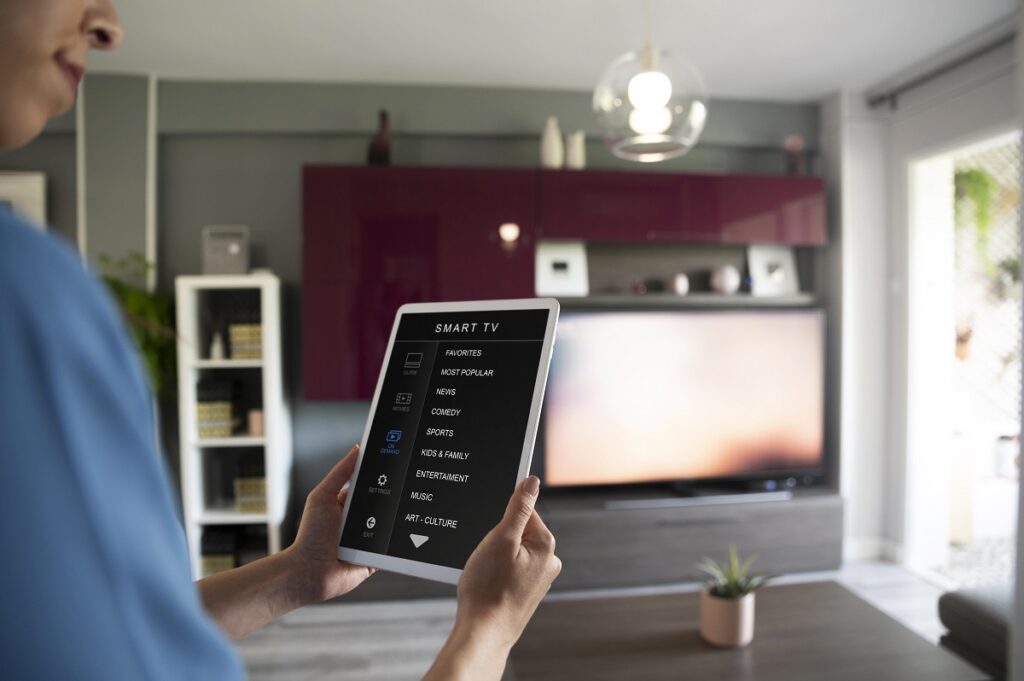
While the KNX smart home system offers a plethora of benefits and opportunities, like any other technology, it comes with its share of challenges. These challenges range from installation complexities to cybersecurity concerns. Let’s delve into these issues and the potential solutions:
Installation and Configuration
The KNX system, while flexible and adaptable, requires a certain level of technical expertise to install and configure. The decentralized architecture and interoperability across multiple brands mean each component needs to be programmed individually to work seamlessly within the system.
Solution: To overcome this hurdle, homeowners can seek help from certified KNX partners. These professionals are trained and experienced in setting up KNX systems and can ensure a smooth installation and configuration process.
Cybersecurity
With the increasing connectivity in smart home systems, cybersecurity has become a significant concern. Unauthorized access to the system could lead to a breach of privacy or even control over home functions.
Solution: One must ensure that all devices in the network are updated with the latest security patches. KNX provides various security measures like KNX Secure that provides end-to-end encryption. Regular audits by cybersecurity professionals can also help to identify and mitigate potential security risks.
Compatibility Issues
While KNX is an open standard and supports a multitude of brands and products, there can sometimes be compatibility issues between devices from different manufacturers.
Solution: The KNX association has a rigorous certification process for all KNX devices, ensuring a high level of interoperability. However, before adding a new device to the system, it’s recommended to check its compatibility and, if possible, consult with a KNX professional.
User Interface
Sometimes, users may find the interface of their KNX system to be complex, particularly if the system incorporates a vast range of functions.
Solution: User interface design is continually improving, and many manufacturers now offer intuitive control options, such as smartphone apps, voice control, or even gesture recognition. Choosing the right interface for your needs can greatly enhance your interaction with your KNX system.
Cost
Implementing a KNX smart home system can be a substantial investment, especially for larger homes.
Solution: The cost should be viewed in the context of the long-term benefits it brings, including energy savings, increased property value, and the convenience and comfort of a truly smart home. Additionally, the system’s scalability means that homeowners can start small and gradually expand their system, spreading out the cost over time.
Despite the challenges, the benefits and opportunities offered by a KNX smart home system far outweigh them. With the right approach and support, these obstacles can be managed effectively, paving the way for a successful and satisfying KNX smart home experience.
Frequently Asked Questions
Conclusion
In conclusion, the KNX system is undeniably revolutionizing home automation. With its remarkable features and unlimited potential, it’s paving the way to a future where smart homes are the norm rather than the exception. The era of the KNX smart home is here, and it’s only set to grow.