
Skip to Content
Go back

What PoE Is and Why It Is Useful for IP Intercoms

What PoE Means in Simple Terms

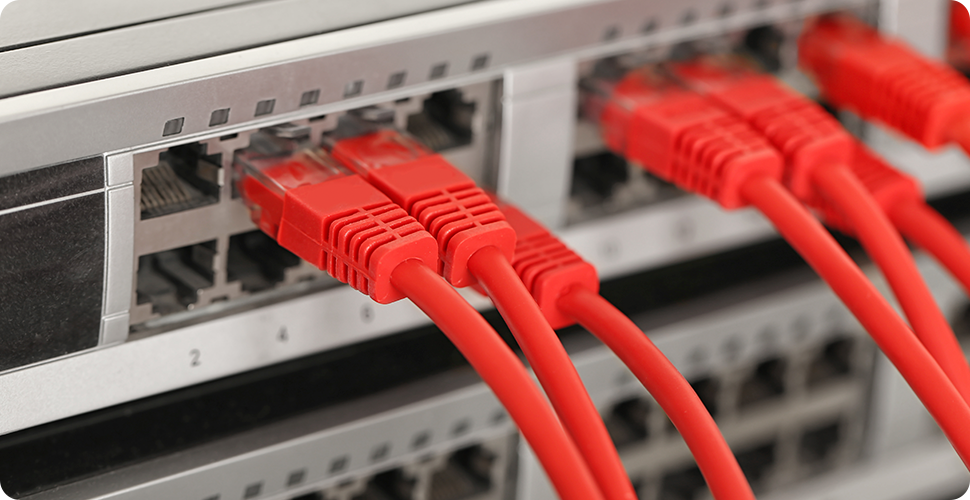
PoE stands for Power over Ethernet. Put simply, it means that the same Ethernet cable can carry both data and power.

That means that, for some devices, you do not need a separate network connection and a separate power feed. If the equipment supports PoE, one cable may be enough for both communication and power.

What This Looks Like in an IP Intercom System

In IP intercom systems, PoE is often used for entry panels, indoor monitors, and other network devices. A cable runs from a PoE switch or another suitable power source to the device, and that single line carries both data and power.

In practice, that makes the connection scheme simpler and cleaner. Instead of two separate lines, you have one.

Why It Is Useful

The main advantage of PoE is that it reduces the number of cables and makes the installation logic tidier. This becomes especially noticeable where the system includes several devices and there is no reason to multiply power supplies and additional cable runs.

PoE also makes life easier for installers: fewer power points, fewer separate adaptors, and fewer places where something can be wired incorrectly or untidily.

Another practical benefit is centralized power. If devices are powered through a PoE switch, they are easier to monitor, restart, and place within a backed-up power scheme.

What PoE Gives an IP Intercom System

For an IP intercom system, PoE is useful because the system is already built around the network. So it is logical when both data and power travel through the same infrastructure.

READ  Jak zostać deweloperem nieruchomości: kompleksowy przewodnik

This is especially convenient on sites with several panels, indoor monitors, a concierge or security station, access controllers, and other network-based equipment. The cleaner the architecture, the easier it is to maintain and expand.

Even on smaller sites, there can still be value in it: installation may be simpler, and the system usually ends up neater and easier to service.
What You Need to Check in Advance

PoE is useful, but it does not mean that every IP device can simply be powered through the network cable without further thought.

First, the device itself has to support PoE. Second, you need to know which PoE standard and power level it requires. Third, the switch or injector must meet those requirements as well.

Even if you are already looking at a specific brand, such as BAS-IP, PoE support and power requirements still need to be checked model by model. You cannot assume that every IP panel or every indoor monitor within one brand is powered in exactly the same way.

It is also worth remembering that not every part of the system is necessarily powered in the same way. One device may work via PoE, while another may still require a separate power supply.

Are There Any Limitations?

Yes. Like any technical solution, PoE has limits.

PoE does not remove the need to think about network quality, cable length, power budget, and equipment compatibility. If the site is complex, the system still has to be properly designed rather than treated as though one cable will solve everything on its own.

READ  Flush-Mounted or Surface-Mounted Entry Panel: Which Should You Choose?

In other words, PoE simplifies the system, but it does not replace sound engineering.

When PoE Makes Particular Sense

PoE is especially useful where the IP intercom system is being built as part of the wider network infrastructure of a site. That may be an office, a residential building, a commercial property, or a modern private house.

The more network devices there are in the system, the more obvious the value becomes: there is less need for separate power supplies and additional power lines.

If You Want the Short Version

PoE is the transmission of power and data over a single Ethernet cable.

For IP intercoms, it is useful because it simplifies installation, makes the system neater, helps centralize power, and fits naturally into a network-based architecture.

Articles

What PoE Means in Simple Terms PoE stands for Power over Ethernet. Put simply, it means that the same Ethernet cable can carry both data and power. That means that, for some devices, you do not need a separate network connection and a separate power feed. If the equipment supports PoE, one cable may be […]

Articles

Start Not with the Design, but with the Use Scenario The most common mistake is choosing an entry panel without a clear task in mind. A panel for a private house, a block of flats, an office, or a commercial site is not the same thing. First, answer the basic questions: How many users will […]

Articles

What the Difference Actually Is A flush-mounted panel is recessed into the wall or into a prepared niche, so only the front face remains visible from the outside. That makes the installation look neater and more integrated. A surface-mounted panel is fixed on top of the wall. It protrudes further, but it is usually much […]

Articles

Termin „wideodomofon IP” często wywołuje pewien skutek uboczny: ludzie zakładają, że taki system musi zależeć od Internetu. Nie jest to do końca prawda. Przyjrzyjmy się, które funkcje domofonu IP mogą działać bez dostępu do Internetu, a które rzeczywiście wymagają połączenia zewnętrznego. Krótka odpowiedź brzmi: tak, w wielu przypadkach wideodomofon IP może działać bez dostępu do […]

Articles

Zamówiłeś zakupy lub paczkę, ale nikogo nie ma przy drzwiach, by je otworzyć? Nowoczesny wideodomofon IP rozwiązuje ten problem bez konieczności „zostawiania kluczy sąsiadowi”. Scenariusz jest prosty: kurier dzwoni domofonem, Ty odbierasz połączenie na telefonie, widzisz osobę na wideo, rozmawiasz z nią, zdalnie otwierasz bramę lub wejście do budynku i wskazujesz, gdzie zostawić paczkę. Poniżej […]

Articles

Hartman Controls to firma z branży kontroli dostępu, koncentrująca się na zintegrowanych platformach dla nowoczesnych budynków. Jej flagowa platforma, Odyssey, została zbudowana wokół kontroli dostępu, integrując komunikację interkomową, zarządzanie wideo, kamery oraz interakcję mobilną w jeden spójny ekosystem. Odyssey obejmuje: Zcentralizowaną platformę kontroli dostępu do zarządzania poświadczeniami, drzwiami, windami i uprawnieniami Nowoczesny interfejs zarządzania przez […]

Articles

Współczesna branża domofonowa stanowi unikalne połączenie elektrotechniki, systemów bezpieczeństwa i technologii informacyjnych. W ciągu ponad stulecia sektor ten ewoluował od prostych rur akustycznych do złożonych ekosystemów chmurowych zintegrowanych ze sztuczną inteligencją. Szacuje się, że do 2025 roku globalny rynek urządzeń domofonowych osiągnie wartość 33,4 mld USD, a prognozowany wzrost do 2032 roku wyniesie 75,6 mld […]

Articles

BAS-IP z przyjemnością ogłasza pomyślne potwierdzenie kompatybilności pomiędzy panelami zewnętrznymi wideodomofonów BAS-IP a panelami dotykowymi Zennio z serii Z. Integracja ta łączy profesjonalną technologię domofonową IP z zaawansowanymi interfejsami dotykowymi opartymi na standardzie KNX, zapewniając płynną i niezawodną komunikację w projektach mieszkaniowych i komercyjnych. Potwierdzona funkcjonalność Kompatybilność została rygorystycznie przetestowana i zweryfikowana we wszystkich panelach […]

Articles

Firma BAS-IP z przyjemnością ogłasza udaną integrację swojej zaawansowanej platformy domofonowej i komunikacyjnej z urządzeniami ButterflyMX. Współpraca ta zapewnia większą elastyczność i wygodę zarówno w obiektach mieszkalnych, jak i komercyjnych. Integracja ta umożliwia panelom wejściowym ButterflyMX – wyposażonym w obsługę połączeń SIP – bezproblemowe łączenie się z głośnomówiącym unifonem audio BAS-IP SP-03. W rezultacie użytkownicy […]

Articles

W większości projektów o domofonie myśli się tylko na poziomie schematów i specyfikacji. Na rysunkach pojawiają się schludne symbole; w harmonogramie widać model, ilość i linijkę, która po prostu mówi „szary/czarny”. Następnie budowany jest luksusowy kompleks mieszkalny lub biuro ze starannie zaprojektowanym wnętrzem za poważne pieniądze, a na każdym piętrze, przy każdych drzwiach mieszkania lub […]