
O que é PoE e por que é útil para Interfones IP
O que significa PoE em termos simples
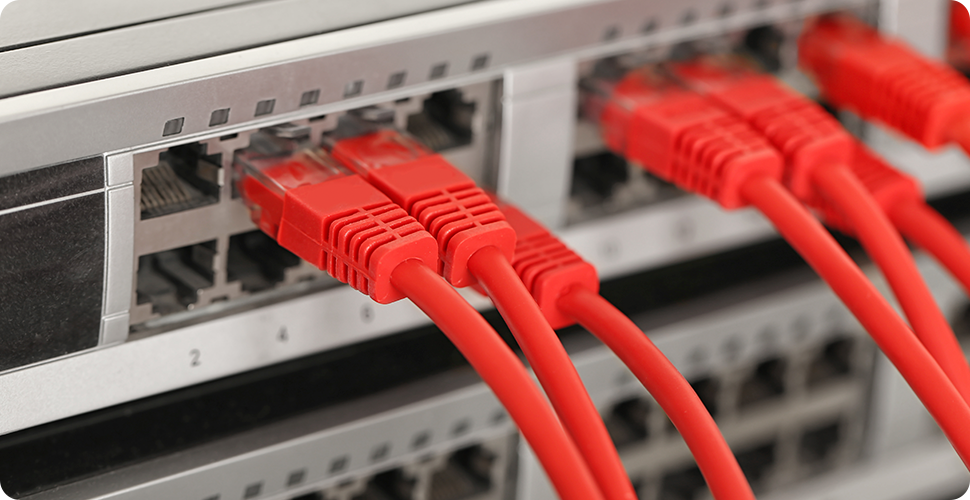
PoE significa Power over Ethernet (Energia sobre Ethernet). De forma simples, significa que o mesmo cabo Ethernet pode transportar tanto dados quanto energia.
Isso significa que, para alguns dispositivos, você não precisa de uma conexão de rede separada e uma alimentação de energia separada. Se o equipamento suportar PoE, um único cabo pode ser suficiente para comunicação e energia.
Como isso funciona em um sistema de interfonia IP
Em sistemas de interfonia IP, o PoE é frequentemente usado para painéis externos, monitores internos e outros dispositivos de rede. Um cabo vai de um switch PoE ou de outra fonte de energia adequada até o dispositivo, e essa linha única transporta dados e energia.
Na prática, isso torna o esquema de conexão mais simples e limpo. Em vez de duas linhas separadas, você tem apenas uma.
Por que é útil
A principal vantagem do PoE é que ele reduz o número de cabos e torna a lógica de instalação mais organizada. Isso se torna especialmente perceptível onde o sistema inclui vários dispositivos e não há razão para multiplicar fontes de alimentação e passagens de cabos adicionais.
O PoE também facilita a vida dos instaladores: menos pontos de energia, menos adaptadores separados e menos locais onde algo pode ser cabeado de forma incorreta ou desordenada.
Outro benefício prático é a energia centralizada. Se os dispositivos forem alimentados por meio de um switch PoE, eles serão mais fáceis de monitorar, reiniciar e colocar em um esquema de energia de reserva (UPS/Nobreak).
O que o PoE oferece a um sistema de interfonia IP
Para um sistema de interfonia IP, o PoE é útil porque o sistema já é construído em torno da rede. Portanto, é lógico quando tanto os dados quanto a energia viajam pela mesma infraestrutura. Isso é especialmente conveniente em locais com vários painéis, monitores internos, uma estação de concierge ou segurança, controladores de acesso e outros equipamentos baseados em rede. Quanto mais limpa a arquitetura, mais fácil será a manutenção e a expansão.
Mesmo em locais menores, ainda pode haver valor nisso: a instalação pode ser mais simples e o sistema geralmente acaba ficando mais arrumado e fácil de reparar.
O que você precisa verificar com antecedência
O PoE é útil, mas não significa que todo dispositivo IP possa simplesmente ser alimentado pelo cabo de rede sem uma análise prévia.
Primeiro, o próprio dispositivo deve suportar PoE. Segundo, você precisa saber qual padrão PoE e nível de potência ele requer. Terceiro, o switch ou injetor também deve atender a esses requisitos. Mesmo que você já esteja olhando para uma marca específica, como a BAS-IP, o suporte ao PoE e os requisitos de energia ainda precisam ser verificados modelo por modelo. Você não pode presumir que cada painel IP ou cada monitor interno dentro de uma marca seja alimentado exatamente da mesma maneira.
Também vale a pena lembrar que nem toda parte do sistema é necessariamente alimentada da mesma forma. Um dispositivo pode funcionar via PoE, enquanto outro ainda pode exigir uma fonte de alimentação separada.
Existem limitações?
Sim. Como qualquer solução técnica, o PoE tem limites.
O PoE não elimina a necessidade de pensar na qualidade da rede, no comprimento do cabo, no orçamento de energia e na compatibilidade dos equipamentos. Se o local for complexo, o sistema ainda precisa ser projetado adequadamente, em vez de ser tratado como se um único cabo fosse resolver tudo sozinho.
Em outras palavras, o PoE simplifica o sistema, mas não substitui uma boa engenharia.
Quando o PoE faz particular sentido
O PoE é especialmente útil quando o sistema de interfonia IP está sendo construído como parte de uma infraestrutura de rede mais ampla de um local. Pode ser um escritório, um edifício residencial, uma propriedade comercial ou uma casa particular moderna.
Quanto mais dispositivos de rede houver no sistema, mais óbvio se torna o valor: há menos necessidade de fontes de alimentação separadas e linhas de energia adicionais.
Se você quer a versão curta
PoE é a transmissão de energia e dados através de um único cabo Ethernet.
Para interfones IP, é útil porque simplifica a instalação, torna o sistema mais organizado, ajuda a centralizar a energia e se ajusta naturalmente a uma arquitetura baseada em rede.