
Qué es el PoE y por qué es útil para los videoporteros IP
Qué significa PoE en términos sencillos
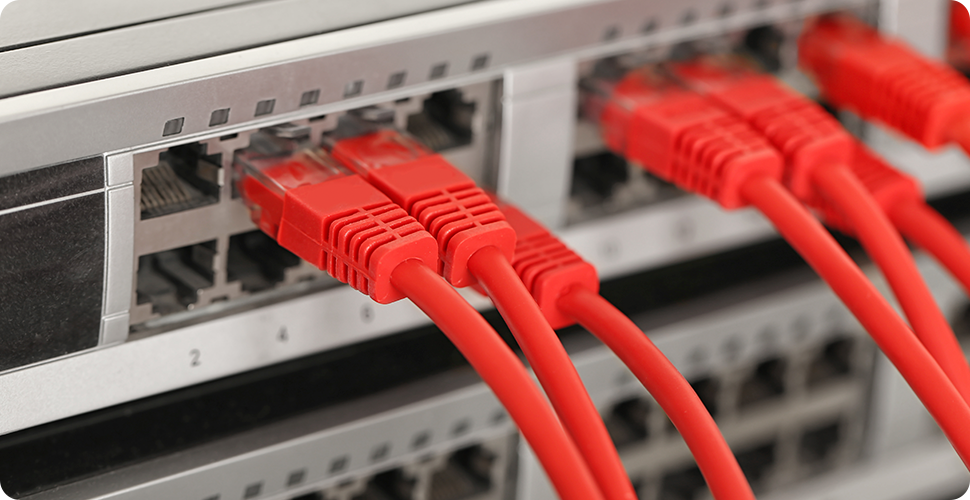
PoE son las siglas de Power over Ethernet (alimentación a través de Ethernet). En pocas palabras, significa que el mismo cable Ethernet puede transportar tanto datos como energía eléctrica.
Eso significa que, para algunos dispositivos, no se necesita una conexión de red independiente y una alimentación eléctrica aparte. Si el equipo es compatible con PoE, un solo cable puede ser suficiente tanto para la comunicación como para la energía.
Cómo se aplica esto en un sistema de videoportero IP
En los sistemas de videoportería IP, el PoE suele utilizarse para las placas de calle, los monitores de interior y otros dispositivos de red. Un cable va desde un switch PoE u otra fuente de alimentación adecuada hasta el dispositivo, y esa única línea transporta tanto los datos como la corriente.
En la práctica, esto hace que el esquema de conexión sea más sencillo y limpio. En lugar de dos líneas separadas, solo hay una.
Por qué es útil
La principal ventaja del PoE es que reduce el número de cables y hace que la lógica de instalación sea más ordenada. Esto se nota especialmente cuando el sistema incluye varios dispositivos y no hay razón para multiplicar las fuentes de alimentación y los tramos de cable adicionales.
El PoE también facilita la vida de los instaladores: menos puntos de alimentación, menos adaptadores independientes y menos lugares donde algo pueda cablearse de forma incorrecta o descuidada.
Otro beneficio práctico es la alimentación centralizada. Si los dispositivos se alimentan a través de un switch PoE, son más fáciles de supervisar, reiniciar y colocar dentro de un esquema de alimentación de reserva (SAI/UPS).
Qué aporta el PoE a un sistema de videoportero IP
Para un sistema de videoportero IP, el PoE es útil porque el sistema ya está construido en torno a la red. Por tanto, es lógico que tanto los datos como la energía viajen a través de la misma infraestructura. Esto resulta especialmente cómodo en instalaciones con varias placas, monitores de interior, una estación de conserjería o seguridad, controladores de acceso y otros equipos basados en red. Cuanto más limpia sea la arquitectura, más fácil será su mantenimiento y ampliación.
Incluso en instalaciones pequeñas, puede seguir teniendo valor: la instalación puede ser más sencilla y el sistema suele quedar más ordenado y ser más fácil de mantener.
Qué hay que comprobar de antemano
El PoE es útil, pero no significa que cualquier dispositivo IP pueda alimentarse simplemente a través del cable de red sin más consideraciones.
En primer lugar, el propio dispositivo tiene que ser compatible con PoE. En segundo lugar, hay que saber qué estándar PoE y qué nivel de potencia requiere. En tercer lugar, el switch o el inyector también deben cumplir esos requisitos. Incluso si ya está considerando una marca específica, como BAS-IP, la compatibilidad con PoE y los requisitos de alimentación deben comprobarse modelo por modelo. No se puede asumir que todas las placas IP o todos los monitores de interior de una misma marca se alimenten exactamente de la misma manera.
También conviene recordar que no todas las partes del sistema se alimentan necesariamente de la misma forma. Un dispositivo puede funcionar vía PoE, mientras que otro puede seguir necesitando una fuente de alimentación independiente.
¿Existen limitaciones?
Sí. Como toda solución técnica, el PoE tiene sus límites.
El PoE no elimina la necesidad de pensar en la calidad de la red, la longitud del cable, el presupuesto de potencia (power budget) y la compatibilidad de los equipos. Si la instalación es compleja, el sistema debe diseñarse correctamente en lugar de tratarse como si un solo cable fuera a resolverlo todo por sí solo.
En otras palabras, el PoE simplifica el sistema, pero no sustituye a una buena ingeniería.
Cuándo tiene especial sentido el PoE
El PoE es especialmente útil cuando el sistema de videoportero IP se construye como parte de una infraestructura de red más amplia de un lugar. Puede tratarse de una oficina, un edificio residencial, una propiedad comercial o una casa particular moderna.
Cuantos más dispositivos de red haya en el sistema, más evidente será su valor: hay menos necesidad de fuentes de alimentación independientes y de líneas eléctricas adicionales.
Si quiere la versión corta
El PoE es la transmisión de energía y datos a través de un único cable Ethernet.
Para los videoporteros IP, es útil porque simplifica la instalación, hace que el sistema sea más ordenado, ayuda a centralizar la alimentación y encaja de forma natural en una arquitectura basada en red.