Skip to Content
Go back

What PoE Is and Why It Is Useful for IP Intercoms

What PoE Means in Simple Terms

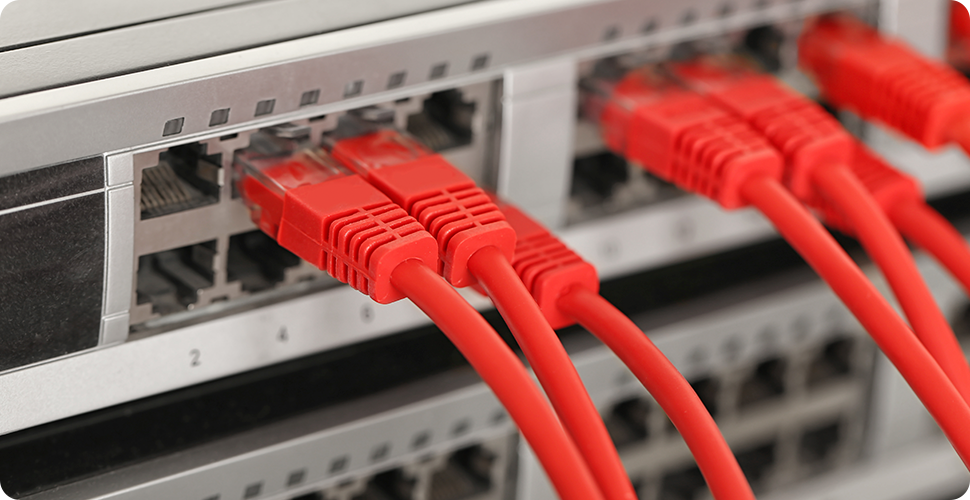
PoE stands for Power over Ethernet. Put simply, it means that the same Ethernet cable can carry both data and power.

That means that, for some devices, you do not need a separate network connection and a separate power feed. If the equipment supports PoE, one cable may be enough for both communication and power.

What This Looks Like in an IP Intercom System

In IP intercom systems, PoE is often used for entry panels, indoor monitors, and other network devices. A cable runs from a PoE switch or another suitable power source to the device, and that single line carries both data and power.

In practice, that makes the connection scheme simpler and cleaner. Instead of two separate lines, you have one.

Why It Is Useful

The main advantage of PoE is that it reduces the number of cables and makes the installation logic tidier. This becomes especially noticeable where the system includes several devices and there is no reason to multiply power supplies and additional cable runs.

PoE also makes life easier for installers: fewer power points, fewer separate adaptors, and fewer places where something can be wired incorrectly or untidily.

Another practical benefit is centralized power. If devices are powered through a PoE switch, they are easier to monitor, restart, and place within a backed-up power scheme.

What PoE Gives an IP Intercom System

For an IP intercom system, PoE is useful because the system is already built around the network. So it is logical when both data and power travel through the same infrastructure.

Se även  IP-videointercom i 2025: vad de är, varför du behöver en och hur du väljer utan misstag

This is especially convenient on sites with several panels, indoor monitors, a concierge or security station, access controllers, and other network-based equipment. The cleaner the architecture, the easier it is to maintain and expand.

Even on smaller sites, there can still be value in it: installation may be simpler, and the system usually ends up neater and easier to service.

What You Need to Check in Advance

PoE is useful, but it does not mean that every IP device can simply be powered through the network cable without further thought.

First, the device itself has to support PoE. Second, you need to know which PoE standard and power level it requires. Third, the switch or injector must meet those requirements as well.

Even if you are already looking at a specific brand, such as BAS-IP, PoE support and power requirements still need to be checked model by model. You cannot assume that every IP panel or every indoor monitor within one brand is powered in exactly the same way.

It is also worth remembering that not every part of the system is necessarily powered in the same way. One device may work via PoE, while another may still require a separate power supply.

Are There Any Limitations?

Yes. Like any technical solution, PoE has limits.

PoE does not remove the need to think about network quality, cable length, power budget, and equipment compatibility. If the site is complex, the system still has to be properly designed rather than treated as though one cable will solve everything on its own.

Se även  Så här installerar du en intercom: Installationsguide för IP-intercom

In other words, PoE simplifies the system, but it does not replace sound engineering.

When PoE Makes Particular Sense

PoE is especially useful where the IP intercom system is being built as part of the wider network infrastructure of a site. That may be an office, a residential building, a commercial property, or a modern private house.

The more network devices there are in the system, the more obvious the value becomes: there is less need for separate power supplies and additional power lines.

If You Want the Short Version

PoE is the transmission of power and data over a single Ethernet cable.

For IP intercoms, it is useful because it simplifies installation, makes the system neater, helps centralize power, and fits naturally into a network-based architecture.

Articles

What PoE Means in Simple Terms PoE stands for Power over Ethernet. Put simply, it means that the same Ethernet cable can carry both data and power. That means that, for some devices, you do not need a separate network connection and a separate power feed. If the equipment supports PoE, one cable may be […]

Articles

Start Not with the Design, but with the Use Scenario The most common mistake is choosing an entry panel without a clear task in mind. A panel for a private house, a block of flats, an office, or a commercial site is not the same thing. First, answer the basic questions: How many users will […]

Articles

What the Difference Actually Is A flush-mounted panel is recessed into the wall or into a prepared niche, so only the front face remains visible from the outside. That makes the installation look neater and more integrated. A surface-mounted panel is fixed on top of the wall. It protrudes further, but it is usually much […]

Articles

Termen ”IP-videointercom” skapar ofta en sidoeffekt: folk antar att ett sådant system måste vara beroende av internet. Det stämmer inte riktigt. Låt oss titta på vilka funktioner i en IP-intercom som kan fungera utan internetåtkomst och vilka som faktiskt kräver en extern anslutning. Det korta svaret är ja: i många fall kan en IP-videointercom fungera […]

Articles

Har du beställt matvaror eller ett paket, men ingen är hemma för att öppna? En modern IP-porttelefon löser detta utan att du behöver ”lämna nyckeln till en granne”. Scenariot är enkelt: budet ringer på porttelefonen, du tar emot samtalet i din telefon, ser personen via video, pratar med dem, fjärröppnar grinden eller porten och anger […]

Articles

Hartman Controls är ett företag inom passerkontroll som fokuserar på integrerade plattformar för moderna byggnader. Dess flaggskeppsplattform, Odyssey, är uppbyggd kring passerkontroll samtidigt som den integrerar porttelefoni, videohantering, kameror och mobil interaktion i ett enda, sammanhållet ekosystem. Odyssey inkluderar: Centraliserad plattform för passerkontroll för hantering av behörigheter, dörrar, hissar och tillstånd Modernt hanteringsgränssnitt via webb […]

Articles

Den moderna porttelefonbranschen representerar en unik kombination av elektroteknik, säkerhetssystem och informationsteknik. Under mer än ett sekel har denna sektor utvecklats från enkla akustiska rör till komplexa molnekosystem integrerade med artificiell intelligens. År 2025 värderas den globala marknaden för porttelefonenheter till 33,4 miljarder USD, med en beräknad tillväxt till 75,6 miljarder USD år 2032, vilket […]

Articles

BAS-IP har nöjet att meddela den framgångsrika bekräftelsen av kompatibilitet mellan BAS-IP:s svarsapparater för videointercom och Zennio Z-seriens touchpaneler. Denna integrering förenar professionell IP-intercomteknik med avancerade KNX-baserade touchgränssnitt, vilket ger en smidig och tillförlitlig kommunikationsupplevelse för både bostads- och kommersiella projekt. Bekräftad funktionalitet Kompatibiliteten har genomgått rigorösa tester och verifierats för alla BAS-IP:s entrépaneler och […]

Articles

BAS-IP har nöjet att meddela den framgångsrika integrationen av sin avancerade porttelefoni- och kommunikationsplattform med ButterflyMX-enheter. Detta samarbete ger ökad flexibilitet och bekvämlighet för både bostads- och kommersiella fastigheter. Denna integration gör det möjligt för ButterflyMX-entrépaneler – utrustade med SIP-stöd – att sömlöst ansluta till den handsfree-baserade svarsapparaten BAS-IP SP-03. Som ett resultat kan användare […]

Articles

I de flesta projekt tänker man på dörrtelefoni endast på nivån av scheman och specifikationer. På ritningarna syns prydliga symboler; i schemat ser du modell, kvantitet och en rad som helt enkelt säger ”grå/svart”. Sedan byggs ett exklusivt bostadskomplex eller kontor med en noggrant utformad interiör för mycket pengar, och på varje våning, vid varje […]