Skip to Content
Go back

What PoE Is and Why It Is Useful for IP Intercoms

What PoE Means in Simple Terms

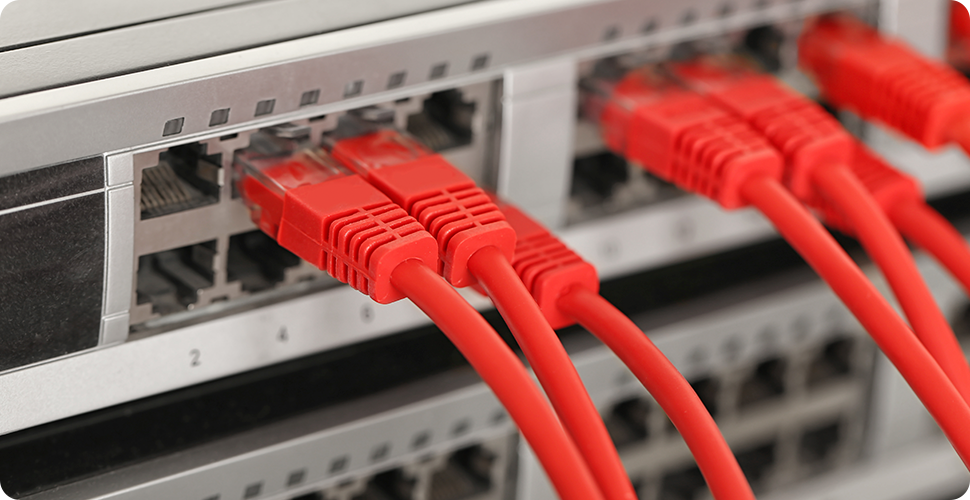
PoE stands for Power over Ethernet. Put simply, it means that the same Ethernet cable can carry both data and power.

That means that, for some devices, you do not need a separate network connection and a separate power feed. If the equipment supports PoE, one cable may be enough for both communication and power.

What This Looks Like in an IP Intercom System

In IP intercom systems, PoE is often used for entry panels, indoor monitors, and other network devices. A cable runs from a PoE switch or another suitable power source to the device, and that single line carries both data and power.

In practice, that makes the connection scheme simpler and cleaner. Instead of two separate lines, you have one.

Why It Is Useful

The main advantage of PoE is that it reduces the number of cables and makes the installation logic tidier. This becomes especially noticeable where the system includes several devices and there is no reason to multiply power supplies and additional cable runs.

PoE also makes life easier for installers: fewer power points, fewer separate adaptors, and fewer places where something can be wired incorrectly or untidily.

Another practical benefit is centralized power. If devices are powered through a PoE switch, they are easier to monitor, restart, and place within a backed-up power scheme.

What PoE Gives an IP Intercom System

For an IP intercom system, PoE is useful because the system is already built around the network. So it is logical when both data and power travel through the same infrastructure.

READ  インターコムからリンクへのスムーズな移行:コミュニケーション体験の向上

This is especially convenient on sites with several panels, indoor monitors, a concierge or security station, access controllers, and other network-based equipment. The cleaner the architecture, the easier it is to maintain and expand.

Even on smaller sites, there can still be value in it: installation may be simpler, and the system usually ends up neater and easier to service.

What You Need to Check in Advance

PoE is useful, but it does not mean that every IP device can simply be powered through the network cable without further thought.

First, the device itself has to support PoE. Second, you need to know which PoE standard and power level it requires. Third, the switch or injector must meet those requirements as well.

Even if you are already looking at a specific brand, such as BAS-IP, PoE support and power requirements still need to be checked model by model. You cannot assume that every IP panel or every indoor monitor within one brand is powered in exactly the same way.

It is also worth remembering that not every part of the system is necessarily powered in the same way. One device may work via PoE, while another may still require a separate power supply.

Are There Any Limitations?

Yes. Like any technical solution, PoE has limits.

PoE does not remove the need to think about network quality, cable length, power budget, and equipment compatibility. If the site is complex, the system still has to be properly designed rather than treated as though one cable will solve everything on its own.

READ  2025年のIPビデオインターコム:それらが何か、なぜあなたに必要なのか、そして失敗しない選び方

In other words, PoE simplifies the system, but it does not replace sound engineering.

When PoE Makes Particular Sense

PoE is especially useful where the IP intercom system is being built as part of the wider network infrastructure of a site. That may be an office, a residential building, a commercial property, or a modern private house.

The more network devices there are in the system, the more obvious the value becomes: there is less need for separate power supplies and additional power lines.

If You Want the Short Version

PoE is the transmission of power and data over a single Ethernet cable.

For IP intercoms, it is useful because it simplifies installation, makes the system neater, helps centralize power, and fits naturally into a network-based architecture.

Articles

What PoE Means in Simple Terms PoE stands for Power over Ethernet. Put simply, it means that the same Ethernet […]

Articles

Start Not with the Design, but with the Use Scenario The most common mistake is choosing an entry panel withou […]

Articles

What the Difference Actually Is A flush-mounted panel is recessed into the wall or into a prepared niche, so o […]

Articles

「IPインターホン」という言葉は、しばしばある種の誤解を招きます。それは、このようなシステムが必ずインターネットに依存しているはずだという思い込みです。しかし、それは必ずしも正しくありません。IPインターホンのどの機能が […]

Articles

食料品や小包を注文したけれど、ドアを開ける人が誰もいない。そんな時、最新のIPインターホンがあれば、「隣人に鍵を預ける」必要はありません。シナリオは簡単です。配達員がインターホンを鳴らすと、あなたのスマートフォンに通知が […]

Articles

Hartman Controlsは、近代的な建物向けの統合プラットフォームに特化したアクセス制御(入退室管理)企業です。同社の主力プラットフォームである「Odyssey」は、アクセス制御を中心に構築されており、インターホ […]

Articles

現代のインターホン業界は、電気工学、セキュリティシステム、情報技術の独自の融合体である。1世紀以上にわたり、この分野は単純な伝声管(アコースティック・チューブ)から、人工知能を統合した複雑なクラウドエコシステムへと進化を […]

Articles

BAS-IPは、BAS-IPビデオインターホン玄関子機とZennio Zシリーズ・タッチパネルとの間での互換性が正常に確認されたことを発表いたします。この統合により、プロフェッショナルなIPインターホン技術と先進的なKN […]

Articles

BAS-IPは、当社の高度なインターホンおよび通話通信プラットフォームとButterflyMXデバイスとの統合が成功したことをお知らせいたします。この提携により、住宅および商業施設の両方において、柔軟性と利便性が向上しま […]

Articles

ほとんどのプロジェクトにおいて、ドアエントリーは回路図や仕様書のレベルでのみ考えられています。図面には整然とした記号が現れ、仕様書にはモデル、数量、そして単に「グレー/ブラック」と書かれた一行があるだけです。その後、多額 […]